Minors on the move across the Mediterranean
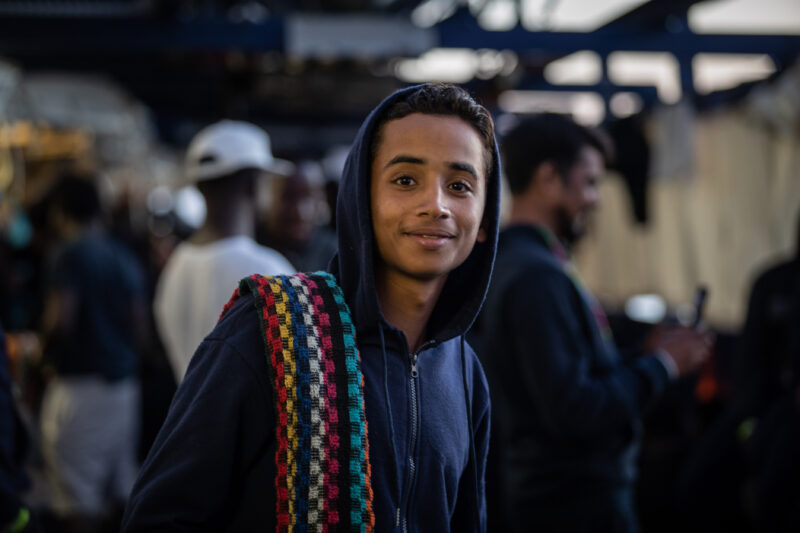
Minors on the dangerous Mediterranean route
On average, one child loses it’s life every day while fleeing across the central Mediterranean route from North Africa to Europe. This is preventable.
123.2 million people were displaced at the end of 2024. This is an increase of seven million compared to the previous year. Around 49 million of them were children and young people under the age of 18. Between 2018 and 2024, 2.3 million children were born while fleeing – often without a birth certificate, nationality and the rights that come with it.
People do not flee voluntarily, but out of dire necessity. They flee war, poverty, climate disasters and violence. On dangerous routes, they experience abuse, exploitation, imprisonment or violent repatriation. For many, their journey ends in the Mediterranean, where one of the most dangerous routes in the world runs – particularly dangerous for children.
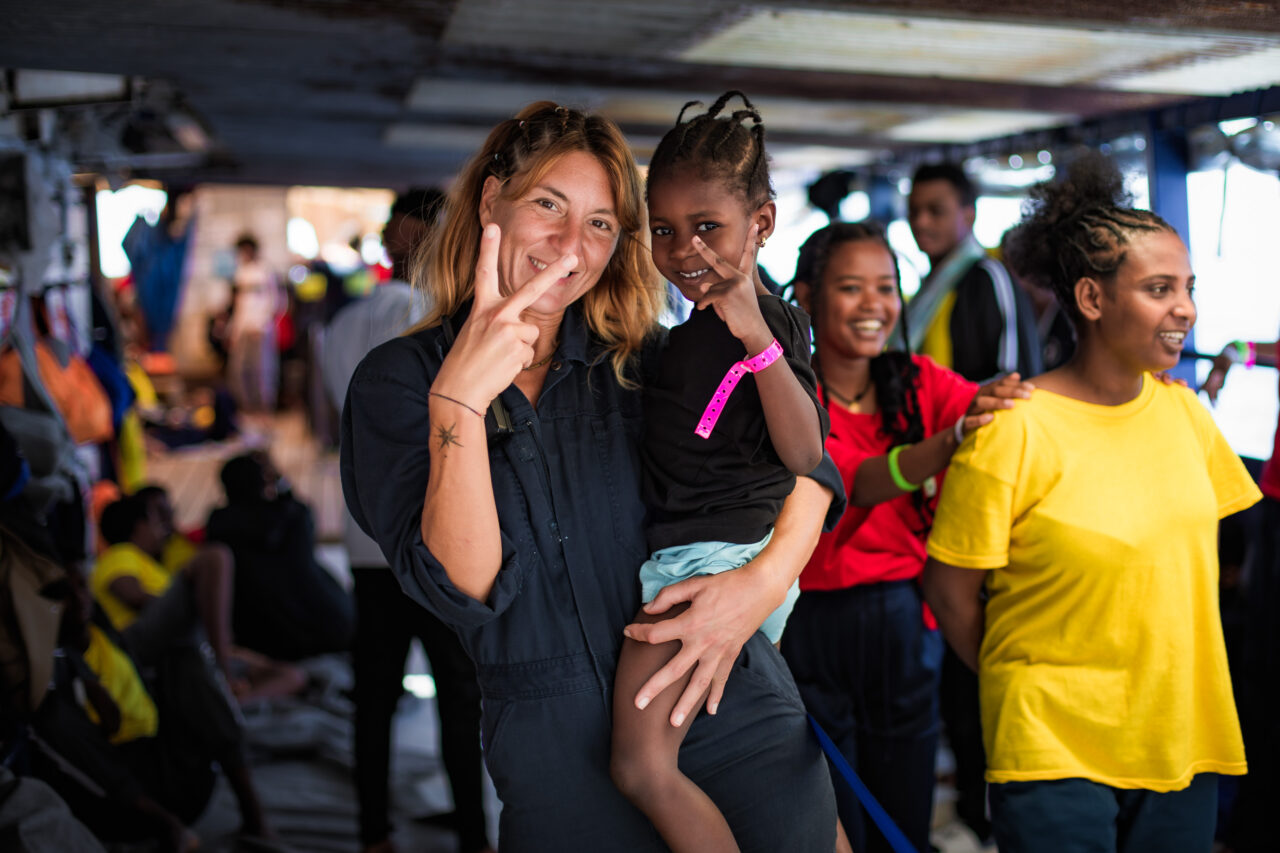
Around a quarter of minors
Over the past ten years, more than 21,000 people have lost their lives on the central Mediterranean migration route. In 2025 alone, more than 1,300 people died – including many children and young people. Most of them were fleeing without adult accompaniment. Since 2015, at least 3,500 children have died or gone missing on their way across the Mediterranean to Europe (April 2025).
The crew of Humanity 1 has been monitoring the proportion of unaccompanied minors fleeing since the beginning of their rescue operations: In 2025, minors rescued by SOS Humanity accounted for around a quarter of the refugees taken on board from distress at sea, with unaccompanied minors accounting for around a fifth. They are particularly vulnerable. Often, they have been on the run for years and, as children travelling alone, have experienced unimaginable cruelty.
Ester, a qualified psychologist who worked on the rescue ship Humanity 1 in 2024, reports the following about the situation of minors: ‘Everyone I spoke to told me about profoundly traumatic experiences. These range from severe forms of sexual violence to torture, child labour, loss of family members and cases of human trafficking.’
Keita was rescued by the crew of the ship Humanity 1.
*Name changed to protect the minor.
Together with partner organisations such as SOS-Kinderdörfer weltweit, we at SOS Humanity are committed to ensuring that children and young people on board our rescue ship Humanity 1 are protected and receive medical and psychological care, allowing them to feel safe again, often for the first time in a long time. The UN Convention on the Rights of the Child and international human rights also emphasize that children and young people are particularly vulnerable.
Our crew tries to offer the minors a little normality during their time on board through games and other activities, allowing them to relax.
Children fleeing their homes need protection, medical care and psychological support. With our missions at sea and on land, we help ensure that children rescued from distress at sea can exercise their right to life and safety. As long as there are no safe escape routes, the Mediterranean will remain a life-threatening border and sea rescue will remain essential. Every human life counts – and every support makes a difference.


