On the importance of gender-specific care on board
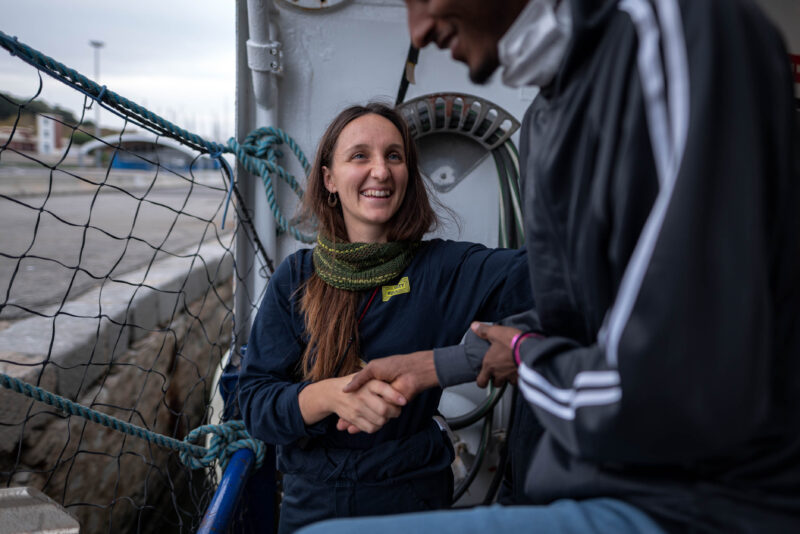
Sometimes I wish people I meet and ask me about my job as a Care Coordinator could see through my eyes, just for a moment. With the film WHERE THE WAVES TOOK HER you get to have this chance.
What stays with me, after many rescue operations and people I met, are some of the most beautiful faces of women and girls when they first come onboard. There is often so much fear in their eyes: uncertainty, exhaustion, not knowing if they are safe yet. Shaking from the cold, wet and often showing some pain signs from the fuel burns that they have on their legs and genital areas.
Then, sometimes very quickly, in these first minutes and hours onboard something shifts: A child cries and through the relief of being safe the mother gets permission to cry as well. It could be a blanket, a cup of tea, a gentle talk. The tension softens.,the first smile and words of joy exchanged with their travel’s sisters and friends. It’s a quiet transformation, incredibly powerful to witness, it never stops affecting me.
The film captures these moments: when fear is still there, but something else begins to exist next to it, maybe a possibility of exhaling.
Why having a midwife onboard is so crucial
We know that today around 1% of the world’s population is forcibly displaced, and nearly half of them are women. When we look at the Mediterranean crossings specifically, these numbers become something very concrete and embodied in the people we meet onboard Humanity 1.
The experiences of women who have been displaced and look for safety are shaped by very specific hardships. Many are fleeing gender-based forms of violence in the first place – such as forced marriage, female genital mutilation, or the threat of femicide. These risks do not disappear during the journey itself. Rather, they are often intensified.
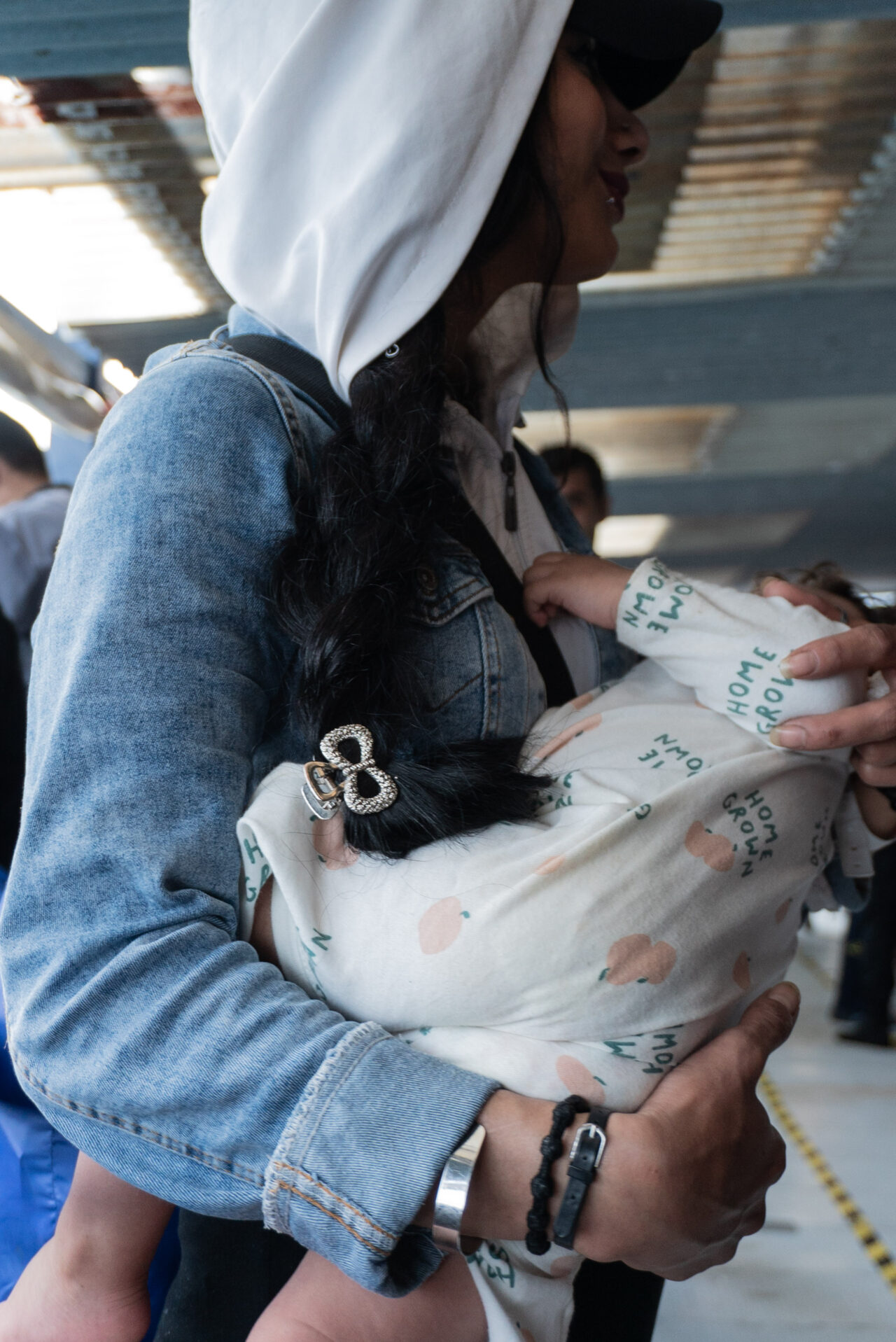
In addition, women are frequently responsible for children, sometimes while pregnant, often without access to safe spaces, privacy or any form of basic health. This combination of factors creates a situation of heightened vulnerability along the entire route, where physical and psychological violence repeatedly occurs.
It’s important to say clearly: almost all the women we meet are survivors of violence. Many of them have experienced severe violence, including sexualised violence, along their journeys. This is a reality we cannot ignore. It shapes their experiences, their needs, and the kind of care that is required. But what I find important is to hold both truths at the same time. The reality of violence – and the reality of strength, dignity, and resilience.
Care on board must be intentional
This is why it is so important that our response is careful and attentive to these realities. Our support structure reflects the fact that people arrive with very different needs, histories, and forms of possible trauma. This also means constantly questioning what care looks like. Too often specific realities of women and other gendered experiences are treated as secondary.
With our care work onboard, we want to create spaces of safety, privacy, and dignity. That is why having a midwife onboard is so fundamental: they specifically focus on women, girls, and children’s care, ensuring that their physical and emotional needs are seen and addressed in a way that is sensitive, informed, and dignified.
Moments that matter: Memories of resilience, strength and dignity
What I carry with me from my work with SOS Humanity are the moments of strength that unfold between a rescue operation and another, or a lunch distribution and a medical evacuation.
We always hold meetings onboard to explain what will happen next when we are arriving to Italy, to answer questions and to propose activities. And during one of those meetings the night before disembarkation, a woman, Grace*, took the microphone and spoke to everyone else onboard to say:
There was something very powerful in that: even after everything she had been through, she was thinking collectively/in solidarity, about the responsibility toward one another.
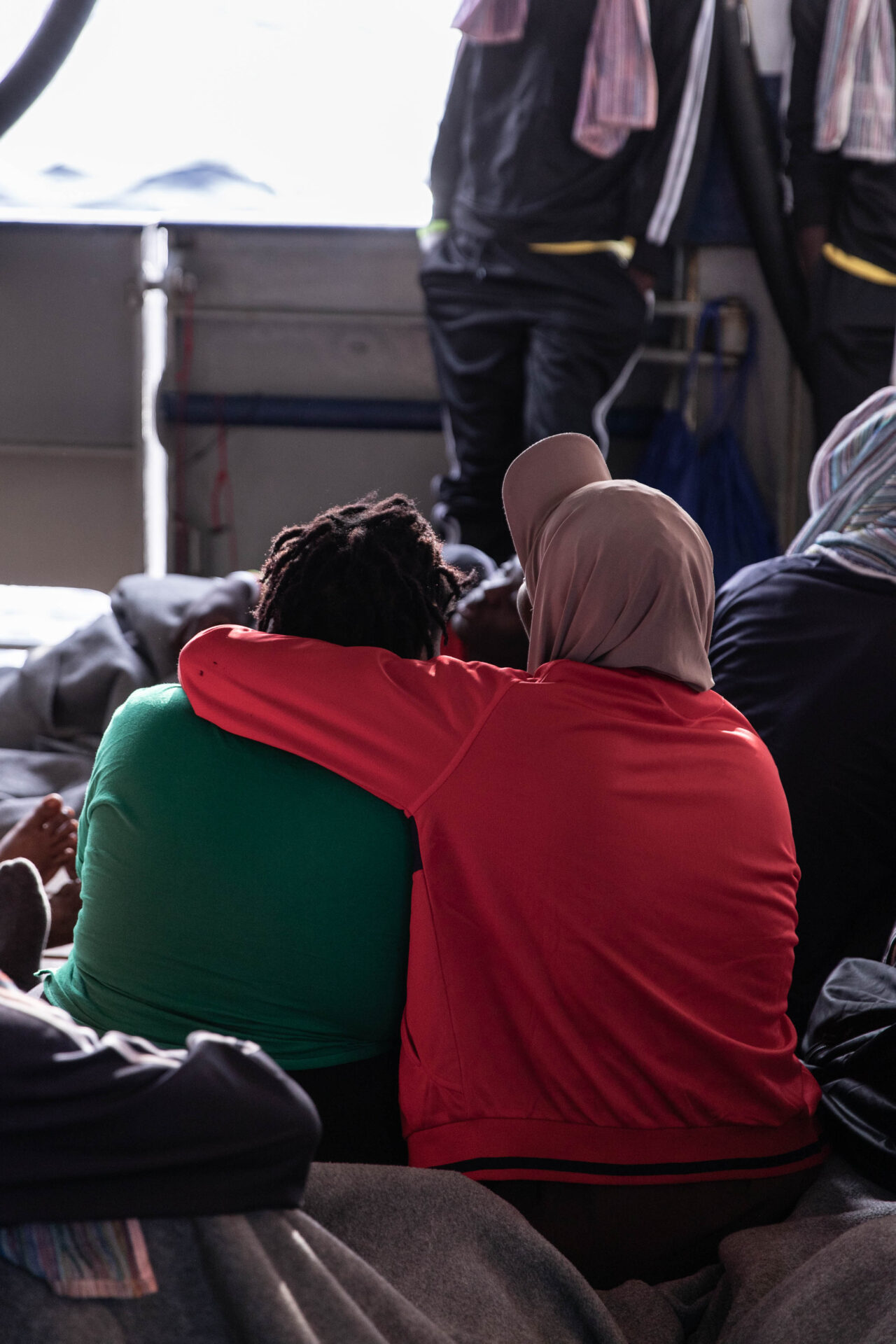
There are also special moments in the women’s shelter, which is a space specifically for women, girls and children where no men are allowed to enter. Sometimes, despite not sharing the same language – whether it’s Bambara, French, or English – women start singing together, language doesn’t matter anymore. I’ve found myself sitting in these circles more than once when laughter, rhythm and voices were coming together. And for a moment, there is a connection that goes beyond everything that has happened before and will happen after.
And then there are moments of arrival. Disembarkation in a port in Italy is often not a moment of relief the way people might imagine. It can be very tense, very uncertain and so many authorities are present on the pier. People are stepping into the unknown again. I remember one particular woman during disembarkation, which on board had been very active and full of energy. When she stepped onto the pier, she said out loud : “I am Masha.” It was such a simple sentence, but it felt like a declaration. Like she was claiming her space, her identity, her existence, in a moment and place where the existence of people on the move is often made invisible. I think these moments matter, because they remind us that the women we meet are not only defined by what has happened to them or what our governments wants us to believe they are fated to.
Centring women’s experiences shifts our perspective on migration
When we center women’s experiences, we don’t just add another perspective, we fundamentally change how migration is understood, because what becomes visible is everything that is usually pushed to the margins. For example, we begin to see how much of this journey is shaped by gendered violence: not as an exception, but as something structural. During rescue operation at sea, we also see the physical realities and consequences of the borders that are often invisible: women arriving with burns from fuel in the boats, carrying children, holding them above the water for hours.
But women and girls also compel us to look beyond suffering, and to question how people are seen, and how care is given. We see how transformative it is to have spaces where women are treated with dignity. Spaces where they can speak, be heard, and exist fully again.
And when we center women, we also start to see forms of knowledge and resistance that are often overlooked; how they can create community very quickly, even across languages; how they protect each other. We can see how solidarity becomes something lived, not something abstract.
Centring women’s perspective also means shifting who is seen as an agent. Women, and children, are often described as “vulnerable,” but what I witness is that they are decision-makers, leaders, and carriers of strength. They are the ones who hold families together, who create moments of care even in the most unstable situations, who claim their identity, like Masha* did.
And I think this forces us, in Europe, to reflect on responsibility. The Mediterranean has become a space of trauma, a graveyard, shaped by political decisions and the will to make these people invisible or reduced to numbers.
Centring women’s experiences shifts the narrative from migration as a “crisis” to be managed, to something much more human and complex. It asks us to see not only what people flee from, but what they carry with them: strength, care, knowledge, and the ability to create connection even in the most incredible conditions.
* name changed for protection


